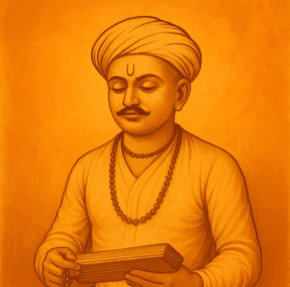
तुकाराम महाराष्ट्र के देहू गाँव में एक साधारण व्यापारी परिवार में जन्मे थे — अनाज और किराने का व्यापार करते थे। पर उनका जीवन एक के बाद एक भीषण संकटों से गुज़रा — अकाल पड़ा, पहली पत्नी और बच्चे भूख से चल बसे, व्यापार में भारी घाटा हुआ, और दूसरी पत्नी की तीखी झिड़कियाँ रोज़ की बात हो गईं।
कहा जाता है कि इन्हीं टूटन भरे वर्षों में तुकाराम भंडारा डोंगर की पहाड़ियों पर अकेले जाकर विठोबा (पंढरपुर के विट्ठल) का नाम-जप करने लगे। धीरे-धीरे व्यापार से मन हट गया और अभंग रचना में मन रम गया — मराठी में सरल, सीधे, कभी-कभी तीखे शब्दों में लिखी भक्ति-कविता, जिसे आम लोग भी समझ और गा सकें।
परंपरा में एक विवादित प्रसंग भी है — कहा जाता है कि स्थानीय पंडितों के दबाव में उनकी अभंग-पोथियाँ इंद्रायणी नदी में डुबो दी गईं, और तेरह दिन बाद वे बिना भीगे सुरक्षित ऊपर आ गईं। यह घटना ऐतिहासिक रूप से प्रमाणित नहीं है, पर वारकरी परंपरा में गहरी श्रद्धा के साथ कही जाती है।
Tukaram was born into an ordinary trading family in the village of Dehu, Maharashtra, dealing in grain and groceries. But his life passed through one crisis after another — a famine, the death of his first wife and children from hunger, heavy losses in trade, and a second wife whose sharp scolding became a daily fact of life.
The story goes that during these broken years, Tukaram began going alone to the hills of Bhandara Dongar to chant the name of Vitthal (Vithoba of Pandharpur). Slowly his heart turned away from trade and toward composing abhangs — devotional verses in plain, direct, sometimes sharp Marathi, written so ordinary people could understand and sing them.
A disputed episode in tradition holds that, under pressure from local pandits, his manuscripts of abhangs were sunk in the Indrayani river, and resurfaced unharmed thirteen days later. This is not historically verified, but it is told with deep reverence in the Warkari tradition.
.png)
.png)